.png)
SHARE


Being part of a large organisation usually means you’ll be working with one or more legacy systems. When these systems were deployed, they were the systems of choice for business productivity and line of business applications. Today, however, these systems can limit a business's agility hampering their ability to respond to market forces and curtailing innovation. As a result, organisations are often looking to replace a legacy system with the latest technology.
But replacement doesn’t necessarily mean improvement.
Compare this scenario with an organisation that has several veteran employees under their wing. Most of the time, businesses rely on their expertise to run essential aspects of their operations due to their experience and technical capability. However, what if they are unable to adjust to modern technologies or processes? Even if it were possible to do so, would it be prudent to replace these experienced employees with younger people with new skill sets? Doing so introduces significant risks and can end up being a very costly affair.
This is the dilemma presented in replacing legacy systems as well. In several cases, legacy systems can hold businesses back from leveraging modern technology and IT infrastructure. However, legacy systems often support critical business or IT processes. So, replacing them entirely with advanced systems can entail several difficulties.
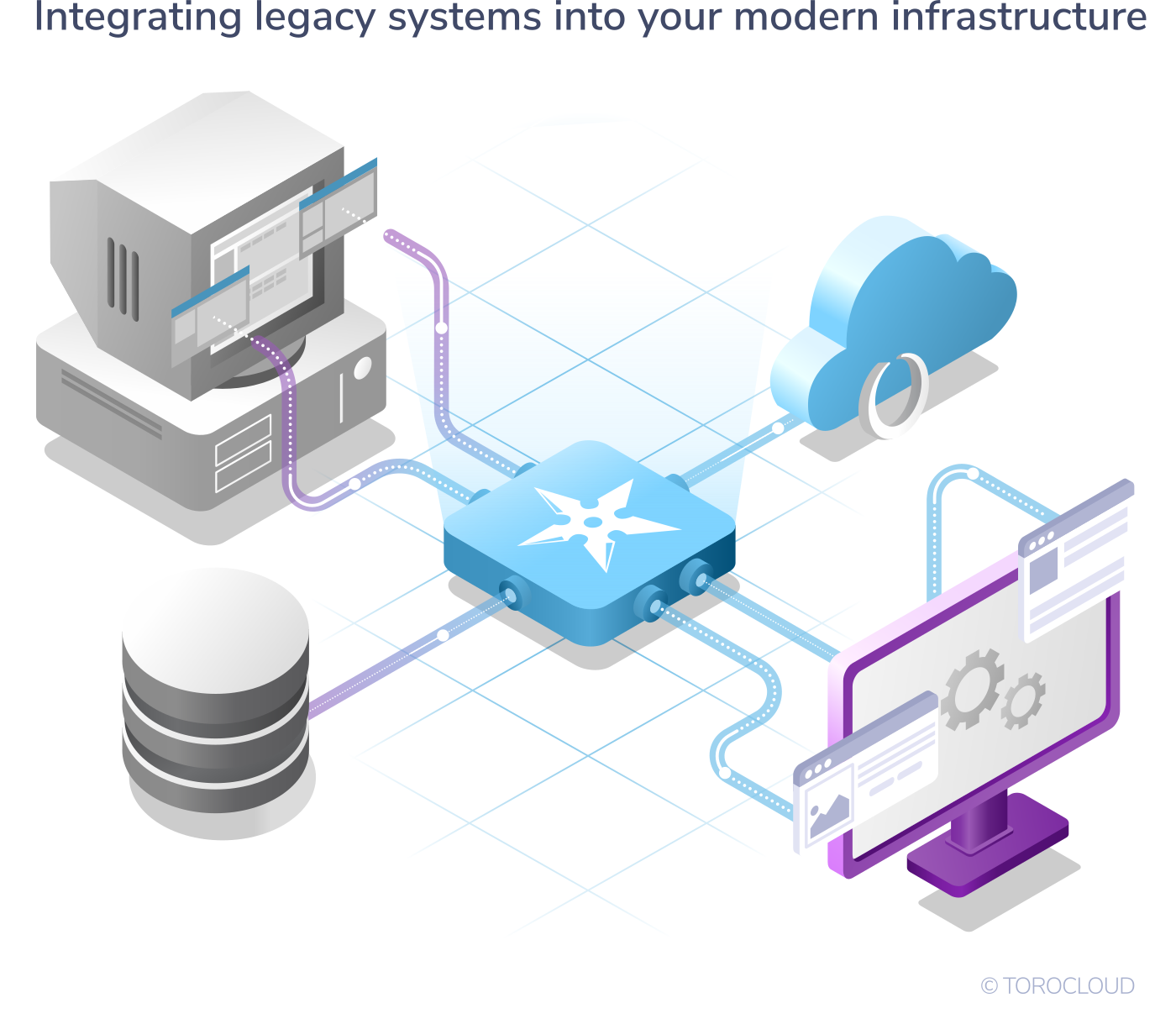
How do we fix this problem?
In this blog, we will discuss what legacy systems are, and how they can be integrated with newer, more modern systems so that an organisation can successfully achieve its goals.
A legacy system is based on older technology, old methods, application programs, or computer systems, which are related to, or part of a computer system that has been considered outdated. Despite their old-age, however, these legacy systems continue to be in use and are often running mission-critical applications and processes.
We can consider mainframe-based systems as legacy systems as an example. The term “legacy” signifies it has set the way and set some standards to follow. At the same time, it may imply that the system needs replacement as it is outdated.
While retaining a legacy system may be expensive, we can adapt legacy systems to make them compatible with modern technologies.
Does embarking on a digital transformation initiative mean permanently discarding legacy systems?
According to a Gartner report, 90% of existing legacy applications will still be in use in 2023. Hence, we can expect a parallel initiative towards digital transformation while keeping the usability of legacy systems. Change is constant, especially in the world of tech. With the aggressive use of agile methodologies, existing business models are challenged daily.
How will you deal with the constant pressure of change while keeping your essential legacy systems in place?
First, accept that legacy modernisation is a long-term commitment instead of a burden. You will need to build a lasting foundation for change that can better adapt to technology and customer shifts for the long term and the near future.
The solution to this? APIs.
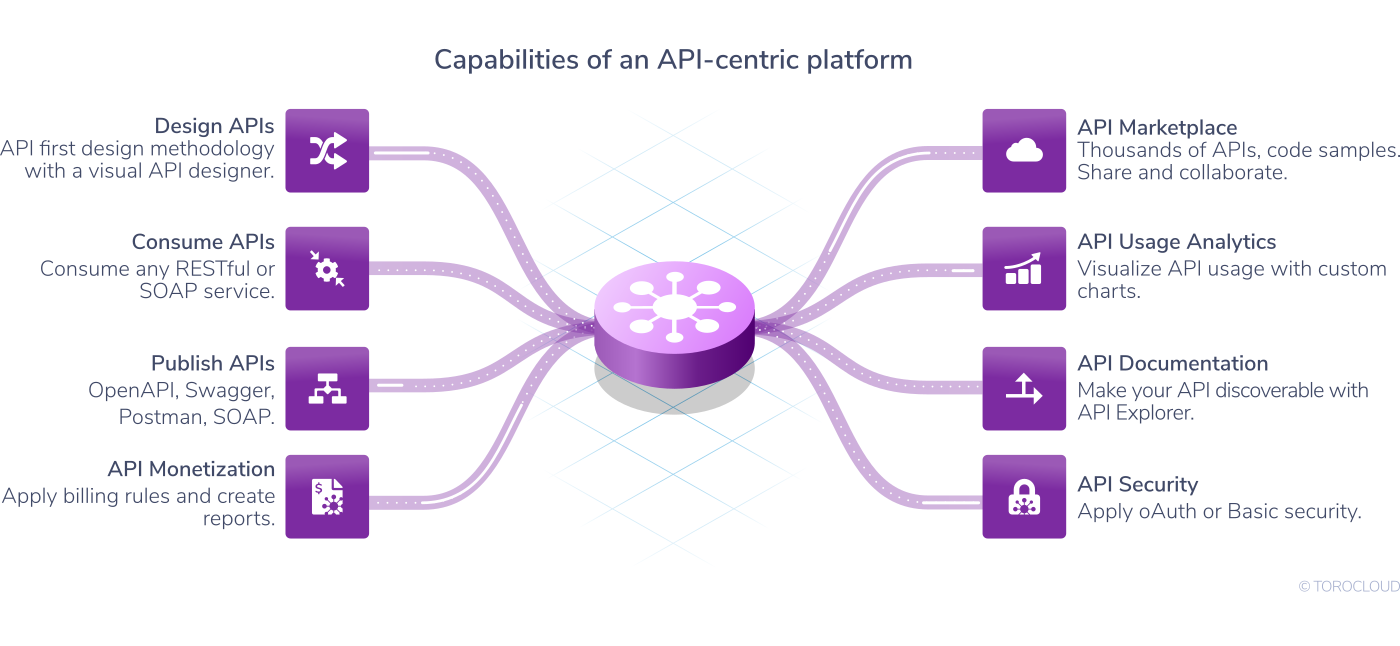
APIs are capable of exposing the data within legacy systems while maintaining their integrity. Leveraging APIs for this purpose allows secure access as well. All these benefits would improve developers’ productivity, allowing businesses to quickly adapt to modern business needs, as they can adapt to advanced technologies and platforms at a faster rate. Thus, the involvement of APIs becomes a vital component in the modernisation of legacy systems, and, in effect, the operations of a business.
However, this is not the end goal — this is simply a step in the right direction that enables the business to be more flexible and adaptable to continually evolving IT requirements in the long run.
Additionally, organisations that choose to embrace API-led connectivity can expose data from legacy systems in a way that protects the integrity of said systems.
APIs also enable the secure and governed access of data while speeding up developer productivity. In this context, APIs should be made discoverable and reusable to become self-serving tools that the organisation itself can utilise to address the business’ changing needs. This eliminates the need for hiring system specialists, which can become costly.
This approach also allows the organisation to plug in new systems and applications into the entire IT infrastructure, which is now ideal for data, applications, and devices, which are integral to the operation of the business and connected via APIs.
Martini™ is Toro Cloud’s API-centric Integration Platform as a Service (iPaaS) for digital transformation, and it leverages your legacy systems through the use of APIs.
Martini™ includes everything you need to consume, publish and manage APIs, integrate cloud-based and on-premise applications, manage data, automate business processes, log transactions, and create reports.
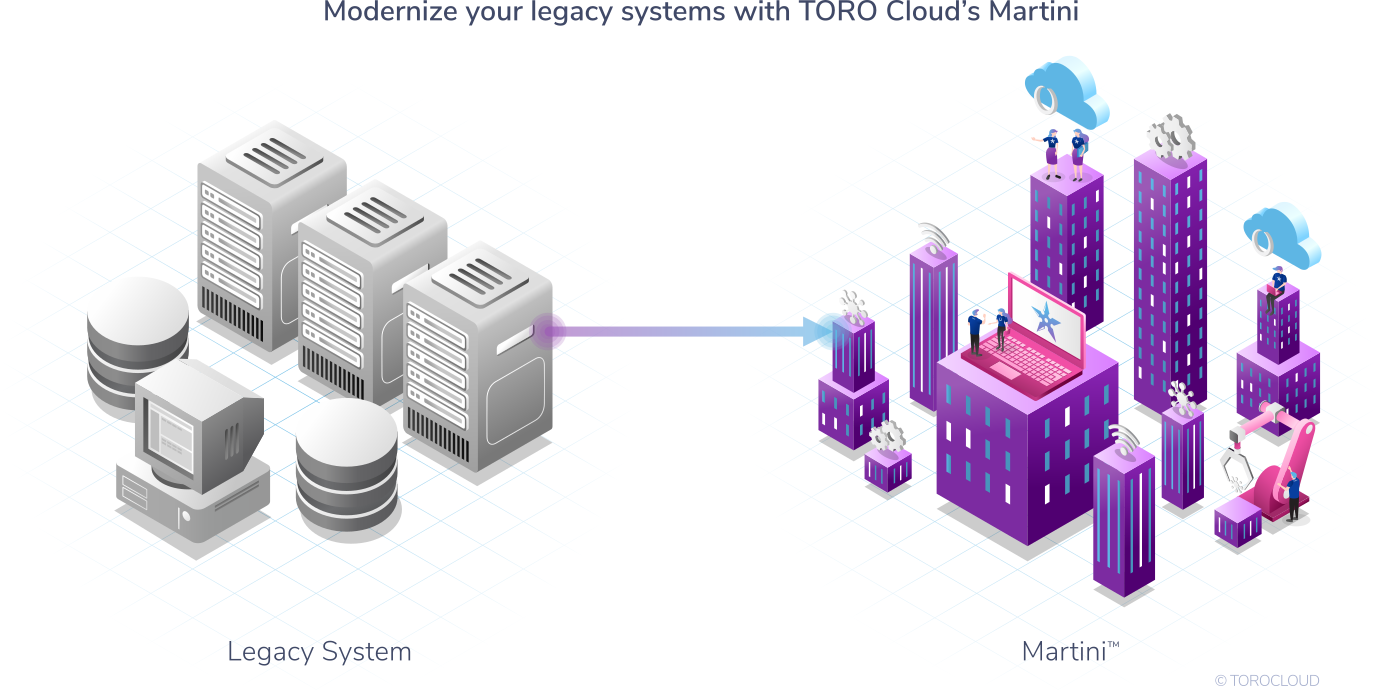
With endpoints available out of the box for the most common protocols and transports, you'll be building sophisticated integrations between your legacy systems, databases, and cloud-based applications faster than you ever thought possible.
We can say that legacy systems are here to stay. However, instead of considering their longevity, we must consider modernisation strategies by leveraging APIs as well. Adopting the legacy approach and building out an application network with it will not only enable significant benefits to organisations but also solve the immediate challenge of integration.
With data integration and modernising legacy systems, organisations have a real opportunity to add value to customers and create new revenue streams using APIs. This will enable third-party providers to access their products and services. This way, organisations can achieve a balance between strategic needs and operational demands to compete and grow. Adopting an API strategy can extend the life of legacy systems and support digital transformation requirements.
With an API-led approach for legacy modernisation, organisations can adapt to changes while offering new services, products, and experiences to customers in a short time.